
If you’re standing in the milk room wondering, why is my goat producing less milk, you’re not alone. It’s a bit of a surprise the first time it happens. The good news, most drops have simple explanations and easy fixes.
Some are totally normal. Some need a quick check. Either way, you can handle it.
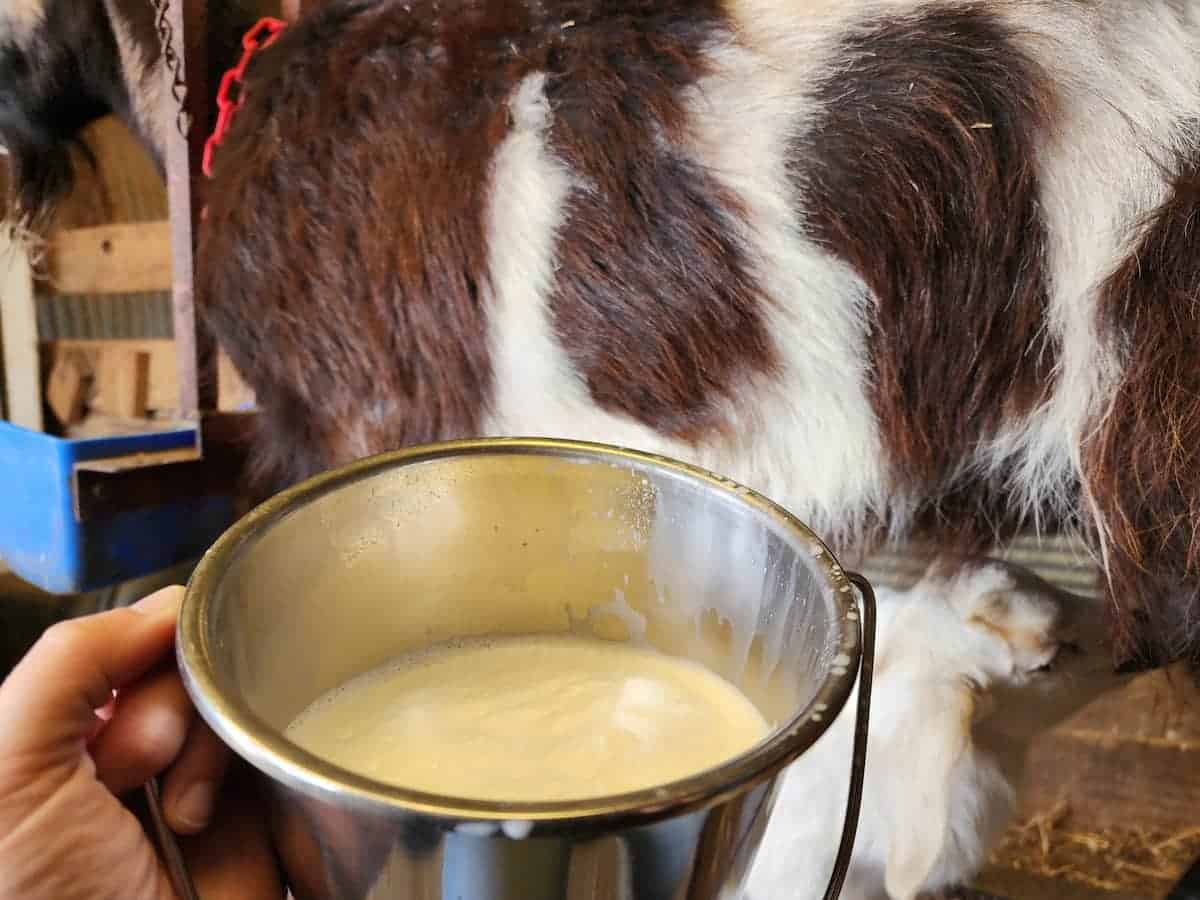
The fast answer to “why is my goat producing less milk?” is this: cycles, heat, age, litter size, diet, and health can all shift output, sometimes overnight. We’ll sort through each one so you know what to look for and what to do next. Always track patterns before assuming a problem.
Understanding Milk Production Changes in Goats
A sudden dip feels alarming, but many causes are nothing to worry about. Goats do not make the same amount of milk every single day throughout a lactation. They ramp up after kidding, hit a peak, then gradually taper. Hormones can swing production for a day or two. A skipped hay day can nick your totals. Illness can drop it fast.
Your job is to notice. If there is a sharp drop, do a quick health check. If the changes are slow and match the season or her cycle, it may be normal.
If you’re brand new to dairy goats and want a solid foundation, my ultimate guide to raising dairy goats for beginners pulls all the basics into one place.
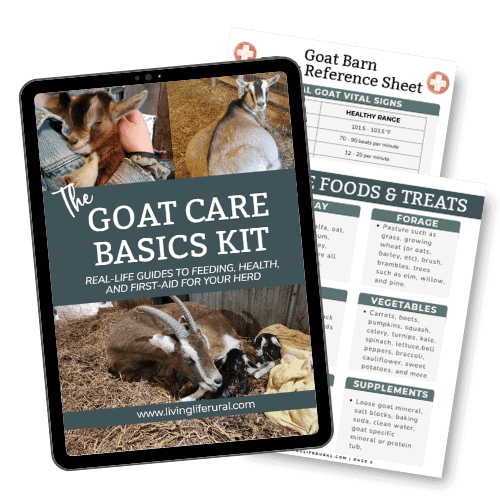
Grab Your Free Goat Care Basics Kit
This kit gives you simple, printable charts and checklists to help you feed, monitor, and care for your goats with confidence.
Natural Lactation Cycles and Seasonal Factors
How Milk Production Builds and Peaks
Fresh milk starts after kidding. Generally speaking, your doe’s body matches supply to what her babies need, which grows over the first weeks. She will not start at peak on day one, that is totally normal.
- Birth: Low initial supply to fit tiny tummies.
- First 1–2 months: Gradual increase as kids’ needs grow.
- Peak: Highest production around 2–3 months post-kidding.
You will hear the word freshening to describe when a goat first gives milk after kidding. Production usually feels smooth and steady during that early climb, then holds near peak for a bit, depending on the doe.
Also, something to note, these are generalizations. Some high-producing does come charging out of the gate with a lot of milk right away though, and you'll have to milk the extra so the babies don't struggle to nurse.
The Natural Taper-Off and Milking Through
After about 6 to 8 months, most does begin to taper, even if everything else is perfect. Some girls are rock stars and can “milk through,” which means you keep milking without rebreeding for up to two years.
That depends on genetics, body condition, and how milky they are by nature. Not all does handle this well. No shame in giving a break and following a yearly breed-and-milk rhythm.
Dairy goats are seasonal breeders, so fall and winter can trigger a natural slow-down. Cooler weather tells their bodies to shift energy to maintenance and repair before the next breeding. If your numbers ease off heading into the cold months, that can be normal.

Why This Isn’t Always a Concern
A gentle taper is part of the cycle. If output trends down during late lactation or as the weather cools, make a note, keep her on a steady diet, and carry on. I know, sometimes the numbers make you second-guess yourself. When the drop is gradual and fits the time of year, you’re likely seeing the normal arc of a lactation.
If you want help picking breeds that tend to hold production better, this guide to choosing the ideal dairy goat breed for milk production is a great place to start.
Hormonal Shifts: Heat Cycles and Temporary Drops
Heat can slice your morning jar in half, then bounce back just as fast. Some does barely change at all. Others are dramatic about it. Both are normal.
Signs to watch for:
- Behavioral changes or restlessness
- More vocalizing than usual
- Tail flagging or extra tail wagging
- Mounting other does
Give it a day or two. Production usually recovers on its own. Not all does react the same, know your herd.
Age-Related Milk Variations
First Fresheners and Peak Potential
First-time milkers are still growing and figuring it out. They often produce less in their first lactation than they will at 3 or 4 years old. That is expected.
With maturity comes more body capacity and a better rhythm in the milk room. Everyone starts somewhere, and first fresheners are doing great just by learning the routine.
Older Goats and Declining Output
Around 8 to 10 years old, many does give less milk than they did in their prime production years at 3 to 5. Age brings wisdom and some slower output. Track her numbers each year so you can spot changes that fit her age versus signs of a problem.
Here’s a simple comparison to set expectations. These are general patterns, not hard rules.
| Age group | Typical pattern in output |
|---|---|
| First freshener (1–2 yrs) | Lower than future years, still building capacity |
| Prime years (3–5 yrs) | Strong, consistent production |
| Mid years (6–7 yrs) | Slightly less than peak, still steady |
| Senior years (8–10+ yrs) | Noticeable decline for many does |
If you want to brush up on the terms you’ll hear with milking and breeding, here’s a handy list of essential goat terms every beginner should know.
Impact of Litter Size on Milk Supply
Some does tailor supply to match demand. A doe with triplets often ramps up more than a doe with a single. High-production girls sometimes ignore litter size and just pour it on anyway, but many do follow the cues of how many mouths they’re feeding.
- Single kid: Baseline production fits one hungry baby.
- Twins: Increase over singles for many does.
- Triplets or quads: Higher demand, higher supply, if the doe’s body allows.
The doe's body adjusts naturally to feed the herd. That’s the amazing part.
This year I had a doe kid with quads. She fed every single one of those kids without me needing to supplement them at all. She fed twins last year without me having to milk extra out. Goats are pretty amazing!

Nutrition’s Role in Maintaining Milk Levels
Essential Diet for Optimal Production
Feed shows up in the bucket. A balanced diet, clean water, and minerals are the backbone of steady milk. I love me some good alfalfa for dairy girls. Pair that with an appropriate grain ration and targeted minerals, and you’ve set the table for strong output. If she is missing nutrients, production can dip, even if everything else looks fine.
Real-life example: we feed free-choice alfalfa to the girls. The goats will eat the front of that bale until they can’t quite reach it. If I forget to pull it forward, I see a dip the next day or two. Not huge, but noticeable. As soon as they can reach again, numbers climb back.
Effects of Inconsistent Feeding
Even one day without normal hay can tap the brakes on production. It often rebounds, but it does show you how sensitive milk output can be to feed and water access. Keep it simple and consistent.
Daily nutrition checklist:
- Fresh alfalfa or quality forage access
- Grain supplements matched to production and body condition
- Clean, plentiful water
- Loose minerals appropriate for your region
Proper nutrition keeps milk steady and your doe feeling good. Not fancy, just functional.
Hey There! Come Join the Conversation!
If you’re looking for a welcoming space to ask questions, swap homestead tips, or just share what’s going on in your garden or barnyard, I’d love for you join our Modern Homesteading for Beginners Facebook group!
Health Issues That Can Reduce Milk Production
A slow taper is one thing. A sharp drop overnight is usually a health flag or a heat cycle. If she is not in heat, check her.
Common causes of sudden drops:
- Mastitis: Infection in the udder can reduce output, sometimes only on one side. Milk may look clumpy or off. The udder can feel hot or hard.
- General sickness: Pneumonia or another infection can crash milk amounts fast. Watch for rapid or difficulty breathing, nasal discharge, or lethargy.
- Calcium imbalance: Milk fever can hit after kidding. Signs can include weakness or wobbly legs, along with a quick fall in production.
Quick checks that help:
- Take her temperature. A fever points to infection.
- Note when she last kidded. Early postpartum dips can be tied to metabolic or uterine issues.
- Feel the udder. Check for heat, pain, or uneven firmness.
- Watch her behavior. Is she off feed, standing apart, or breathing hard?
If your gut says something’s off, call your vet or an experienced mentor. A fast response saves time, money, and stress.
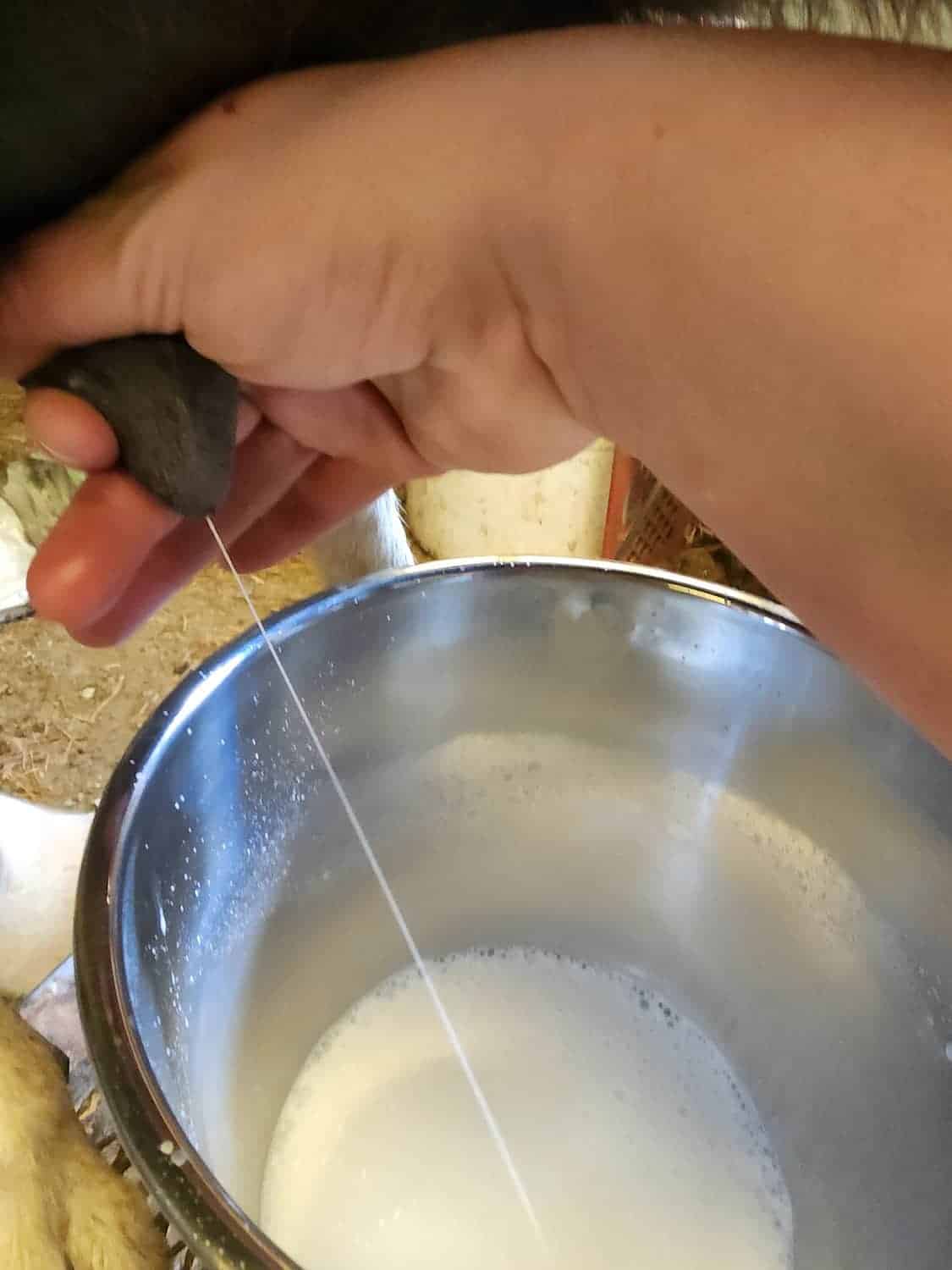
Grab my goat care basics kit above for quick reference info on the health of your goats.
Broader Health and Nutrition Overlaps
Older does and underconditioned animals have fewer reserves. If her body is stretched thin, milk production is often the first thing to slide. Feed quality, parasite load, and weather stress can pile on.
Keep notes on daily yield. A slow decline fits late lactation. A cliff usually means health or feed access.
Simple monitoring plan:
- Daily look-over while milking, nose to tail.
- Note production patterns in a pocket notebook or app.
- If you suspect infection, separate for observation and keep things clean.
I’m not gonna lie, farm life can be a bit stressful on busy days. A 30-second check at each milking still pays off.
Quick Reference: What Changed and What To Do
| Problem pattern | Likely cause | What to try first |
|---|---|---|
| Slow decline after 6–8 months | Natural taper | Keep diet steady, track trend, no rush to fix |
| Sudden lower output, returns in 1–2 days | Heat cycle | Observe behavior, wait it out |
| First lactation, lower than expected | First freshener | Be patient, support with good feed and routine |
| Drop after hay access changes | Nutrition | Restore full access to forage and water |
| One side low, udder hot or hard, milk looks “weird” | Mastitis | Call vet, follow treatment plan, sanitize routine |
| Post-kidding weakness, sharp drop | Milk fever or infection | Check temp, call vet, address calcium and infection risk |
| Seasonal fall and winter slow-down | Seasonal breeders | Accept modest decline, maintain body condition |
Wrapping Up Key Takeaways
If you find yourself asking “why is my goat producing less milk,” start with the simple stuff. Cycles and seasons, heat swings, age, litter size, feed access, and health all play a part. Keep notes, watch patterns, and act fast on sudden changes.
Milk production is a dance between biology, feed, and timing. The more you watch and get to know your herd, the calmer you’ll feel when numbers wiggle a bit.
Consistency in care is your best friend.


