Kidding season can go from calm to crazy in no time. The baby is born, you make sure it's settled with mom, has nursed, etc, then you leave them to bond.
You come back out an hour later to check on them, and you find a lethargic newborn goat kid that feels cold, and your stomach drops.
Truth is, hypothermia (cold) in baby goats can happen fast. Drafts in the barn, wet weather, a long delivery, a weak kid, even “not that cold” temps can chill a newborn quicker than you’d think. It doesn’t automatically mean you messed up.
What matters when you need to warm up a cold baby goat is having a simple plan in place before it happens.. The core rule is simple: warm first, then feed. I’ll walk you through it, not fancy, just functional.

First, figure out how cold the kid really is
Your next move depends on how cold the kid is, so don’t guess if you don’t have to. A basic digital thermometer in your kidding kit is one of those cheap tools that earns its keep.
A goat's normal body temperature is about 101.5 to 103.5°F. If you’re below that, warming becomes priority number one.
If you’re newer to goats and want a bigger picture guide for goat basics (health, management, the whole beginner learning curve), this roundup is a solid bookmark: Beginner’s guide to raising dairy goats.
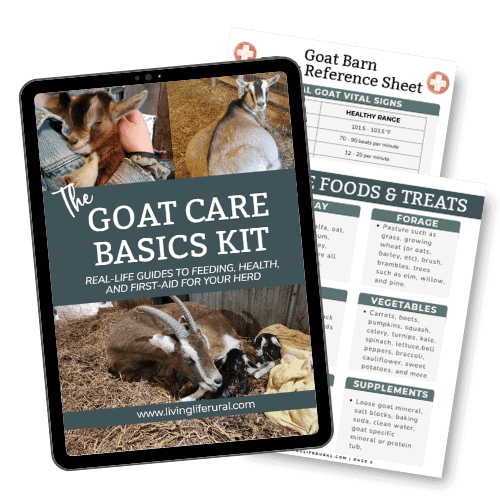
Grab Your Free Goat Care Basics Kit
This kit gives you simple, printable charts and checklists to help you feed, monitor, and care for your goats with confidence.
Check body temperature fast (thermometer first, or use your senses if you have to)
To take a rectal temperature, keep it quick and gentle. Hold the kid snug against your body or have someone steady them. If they are lethargic, you can just leave them lying on the ground/floor.
Use a dab of lubricant if you’ve got it, and if you don’t, a little spit works in a pinch (yep, for real, lol). Insert the thermometer tip carefully into the baby's rectum. You don't have to insert it far, just a half-inch or so. Hold it in place and wait for the reading.
No thermometer handy? Do a fast “common sense” check:
- Mouth and tongue check: Put a clean (ish) finger in the kid’s mouth. If it feels cold to you, the kid is too cold.
- Big-picture signs: Weak, laid out, not trying to get up, not responding well, weak cry or sounds (if any) or acting “checked out.”
This is a quick assessment, not perfection. You’re trying to decide what needs to happen next, right now.

Know the signs that mean it is getting dangerous
Cold kids can look sleepy, but there’s a difference between “resting” and “shutting down.” Watch for behavior that’s sliding the wrong way: low energy, weak or absent responses, trouble holding their head up, or not reacting much when you rub them.
A lot of folks get tripped up by shivering. Here’s the deal:
- A kid may shiver when they’re on the way to getting too cold. It's a normal body response to help keep them warm.. even we shiver to help keep us warm.
- But if they aren't able to compensate for the cold, they actually stop shivering, which indicates they are toooo cold. So, no shivering does not mean they’re fine.
- If you’re actively warming a kid and they start shivering, that can be a good sign. It often means their body temp is climbing back up and the nervous system is “waking up” again.
Cold ears and legs can be a clue, but don’t let that be your only test. The mouth and the overall “life in the kid” tell you much more.

Warm up a cold baby goat safely, using steady heat (no crazy remedies required)
If you remember nothing else, remember this: dry heat and steady heat. Not shocking heat, not random internet remedies, just consistent warmth.
Skip all of the “creative” stuff. You don’t need molasses and cayenne pepper, coffee, or any other questionable quick fix. And you don’t need to put a kid in a warm water bath or do the plastic bag in water thing. A cold kid needs to be dry and warmed slowly and safely.
Dry them first, because wet kids lose heat fast
If the kid is damp (from birth or weather), start there. Wet hair pulls heat off the body like a sponge.
Use towels and get serious about drying. Rub briskly, not just to dry, but to help circulate blood.
Swap out wet towels for dry ones as you go. If the bedding is wet, move the kid. If the pen is drafty, block the draft or move it to a draft-free pen/area. (in the house if needed)
A hair dryer can do double duty here, drying and warming at the same time, but don’t park it in one place. Keep it moving the hair dryer so you don’t burn the skin.

Pick a warming method you can do right now
The “best” method is the one you can do immediately and safely. Choose a steady heat source, then check the kid often.
Here are reliable options that work on a normal homestead:
- Your body heat: Tuck the kid inside your coat (or wrap them against you in a blanket). This isn't my first choice, but if it's the only source of heat you have, it's better than nothing. I'll often stick a kid inside my coat on the way to the house to start slowly warming them.
- Heat lamp (used safely): Hang it securely, keep it at a safe distance, and make sure the kid (or adult goats) can’t touch it. Heat lamps can start fires, so don’t get casual with setup. I only only recommend using these if you can secure them well!
- Heating pad: Put a towel between the pad and the kid, use low heat, and supervise. Burns happen when heat is too direct or too long. Don't use this in the goat pen. We don't want heat pads around liquids (water, pee, etc)
- Hair dryer: Keep it moving, and don’t blast one spot. Think “warm breeze”. You're just wanting to blow hot air over and around the kid to help slowly warm them. You can also make a sort of hot box out of a tote where you just blow the hot air into the box so the kid can be in a warm space and breathe in warm air.
- Hot water bottles: You can fill water bottles with hot water and place them in a tote or cardboard box with the kid. I like to place a towel over the bottles to make sure they don't burn the kid. You can use reuse pop bottles or even use a medical grade hot water bottle. I like to use this method after the kid is mostly warm to help maintain temp. On its own, it won't warm up a severely hypothermic goat kid fast enough.
- Vehicle floorboard: If you’re in a pinch, the floorboard with the heater running can warm a kid fast. Keep them secure and keep checking the mouth and alertness.
Your goal is simple: a kid that feels warmer in the mouth and starts acting like a baby again, more alert, moving, trying to stand, and looking for milk.
Don't forget to try to keep the kid in the sternal position as much as possible. This is a normal position for a goat, not laid out on their side

Feed only after the kid is warm enough to digest milk
I know your first instinct when you see a weak baby is to probably “get something in them.” The problem is that a cold kid can’t digest milk well.
If you feed too soon, milk can sit in the stomach instead of moving through normally, and that can turn into a bigger problem than the chill you started with.
A very cold kid also doesn't have a suckle reflex, and trying to force them to drink milk can actually lead them to aspirate milk. Which, again, leads to even more problems down the road.
Don't “tube feed” a hypothermic kid or force milk into their mouths.
The ONLY thing I would ever recommend as an energy source while you are warming them is maybe some Karo syrup on the gums, BUT in almost every case it's not necessary.
So, yes, “getting something in them” matters, but timing matters much ,much more.

How to tell the kid is ready to eat (and what to feed first)
If you can check an internal temperature, many folks aim for around 100°F before offering a real feeding. If you can’t, let the kid show you.
Signs a kid is ready:
- More alert: Eyes open, responding, holding their head up.\
- Looking for milk: Rooting, mouthing, trying to nurse.\
- Sucking strength: They suck on your finger with purpose, not just a weak nibble.\
- Better swallow: You can see and feel that they’re actually swallowing.
For newborns, warm colostrum comes first. If you can get it from the dam, that’s ideal. It supports immunity, and keeping the doe’s scent on (and in) the kid can lower the odds of rejection.
If you do not have access to colostrum, fresh, warm goat milk is the next best option. If that isn't available, then you can use whole cow's milk (either fresh or from the store). Just make sure it's warm milk (100°F-103°F or just so it feels warm on your wrist)
If you need help with the practical side of feeding (bottles, nipples, getting a kid to latch), this is a good next read: Step-by-step guide to feeding orphaned kids.

Aftercare for the next few hours so the kid stays warm
Once they’re warm and fed, don’t assume you’re done. Cold kids can backslide if the temps are too cold, the barn is damp or drafty, or the momma isn't caring for them.
Keep them dry, bedded on clean straw (shavings or other bedding work as well), and out of the wind. Check them often for alertness and warmth, and make sure they’re nursing regularly.
During kidding season, it helps to have a simple “warm kid spot” ready, like a small pen with fresh bedding and a safe heat source.
If you want extra heat without the fire risk of heat lamps, I love using an infrared heat panel like this Sweeter Heater. It’s my favorite way to give steady warmth when a kid needs help. (Side note, they also work AMAZING for brooding chicks)
My warm kid spot is a calf hut full of straw, a sweeter heater low enough for the kids, and the door blocked off so they can't accidentally get out in the cold.
FAQ's
One warm kid at a time
When a baby goat gets cold, the steps are straightforward:
- Check how cold they are
- Dry and warm them with steady heat
- Don’t feed until they’re warm enough to handle milk.
Pay attention to shivering (no shivering can be a bad sign if they are cold), then get colostrum or milk in once the kid is alert and wanting to suck.
Everybody starts somewhere, and this is one of those skills that gets easier each season. Stay calm, do the next right thing, and keep showing up. That’s good stewardship, and it’s also where hope lives, right in the middle of the barn.